


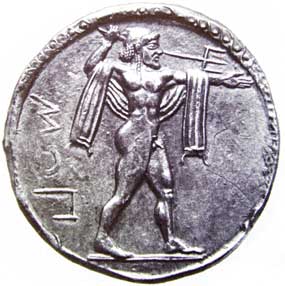
 Paestum is one of the most important archaeological sites of Magna Graecia. Over more than a thousand years of history, the city changed population, culture and even its name: Poseidonia under the Greeks, Paistom during the Lucanian period and finally Paestum under Roman rule.
Its temples, city walls, forum, amphitheatre and the many artefacts preserved in the Archaeological Museum still reveal the different phases of its long history.
Discover the history of Paestum, from ancient Poseidonia to the Roman city
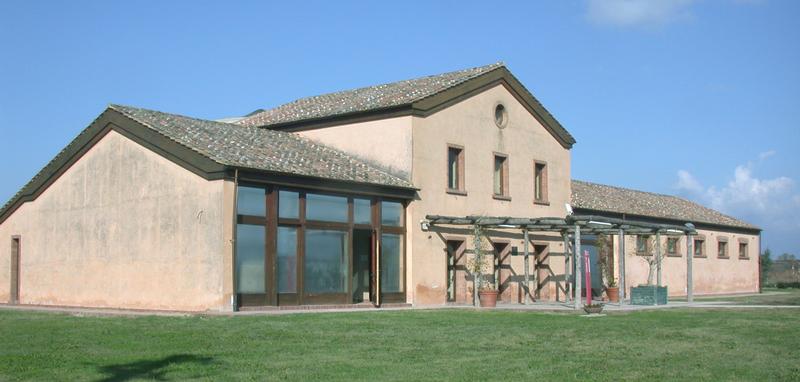
The Sanctuary of Hera at the mouth of the Sele River, also known as the Heraion of the Sele, was one of the most important religious centres associated with ancient Poseidonia.
It lies around 9–10 kilometres north of Paestum, close to the River Sele, in an area that marked the northern boundary of the territory controlled by the Greek city.
Dedicated to Hera Argiva, the sanctuary was not only an important place of worship but also a symbolic landmark between the Greek territory of Poseidonia and the communities living north of the Sele.
Discover the Sanctuary of Hera and the ancient Heraion of the Sele
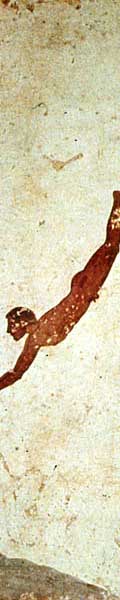 The Tomb of the Diver is one of the most famous works preserved in the National Archaeological Museum of Paestum and an exceptional example of Greek painting from the 5th century BC.
Dating to around 480–470 BC, it takes its name from the extraordinary scene painted on the covering slab: a naked young man diving from a stone structure into a pool of water.
The tomb was discovered in 1968 in the necropolis of Tempa del Prete, south of ancient Poseidonia, during excavations directed by archaeologist Mario Napoli.
Discover the Tomb of the Diver and its extraordinary Greek paintings
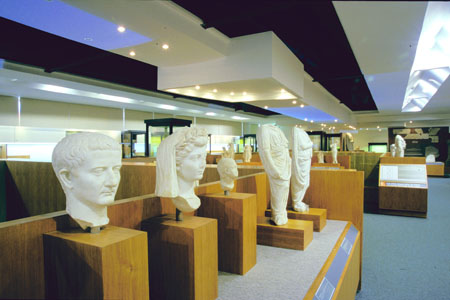
The National Archaeological Museum of Paestum is an essential part of any visit to the ancient city. Located beside the archaeological area, it houses objects discovered at Poseidonia-Paestum and in the surrounding territory, allowing visitors to understand the history behind the temples and monuments visible outside.
Founded in 1952, the museum has grown considerably over the decades. Its exhibition was completely renewed and expanded in 2023, creating a modern journey through the history of Paestum from its earliest origins to the Greek, Lucanian and Roman periods.
Discover the Archaeological Museum of Paestum and its exceptional ancient collections
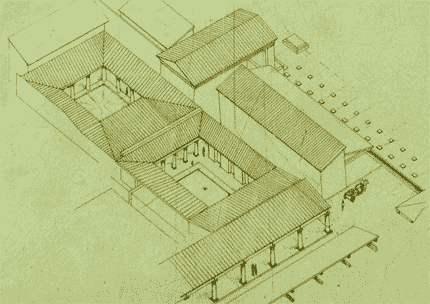
The great temples are the most famous monuments of Paestum, but the remains of the ancient city's houses reveal another equally important aspect of its history: the everyday life of its inhabitants.
Residential buildings occupied the blocks defined by the city's street network and were repeatedly constructed, enlarged and transformed over the centuries. Beneath Roman houses, archaeologists have discovered traces of earlier Greek and Lucanian buildings.
Discover the houses of Paestum and everyday life in the ancient city
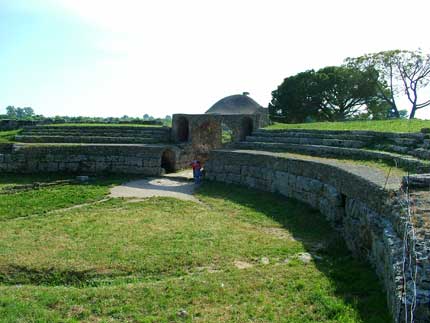
The Amphitheatre of Paestum is one of the most important monuments of the Roman city. It stands just north-east of the Forum and provides valuable evidence of the transformation of ancient Poseidonia after the establishment of Roman rule.
The first phase of the building probably dates to the middle of the 1st century BC, around 50 BC, making it an early example of a monumental Roman amphitheatre.
The building was used for public entertainment, particularly gladiatorial combats and other spectacles held in the arena.
Discover the Roman Amphitheatre of Paestum and its gladiatorial games
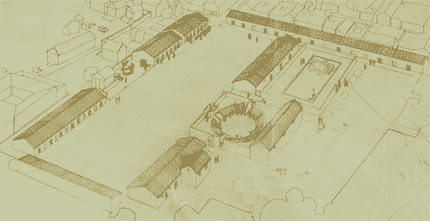
The Roman Forum of Paestum was the political, administrative, commercial and religious centre of the city during the Roman period.
Its development began after 273 BC, when Rome established a Latin colony at Paestum. The new public centre occupied part of the former Greek Agora, marking a major transformation in the organisation of the ancient city.
Discover the Roman Forum and the heart of ancient Roman Paestum
The Agora of Paestum was the political and public heart of ancient Poseidonia. Located in the central part of the Greek city, between the northern and southern sanctuaries, it was one of the most important public spaces of the settlement.
The Agora was much more than an open square. It contained monuments connected with the political, civic and religious life of the community, including the Ekklesiasterion, where citizens gathered in assembly, and the Heroon, a monument associated with the memory of the city's founder.
Discover the Agora, the political heart of ancient Poseidonia
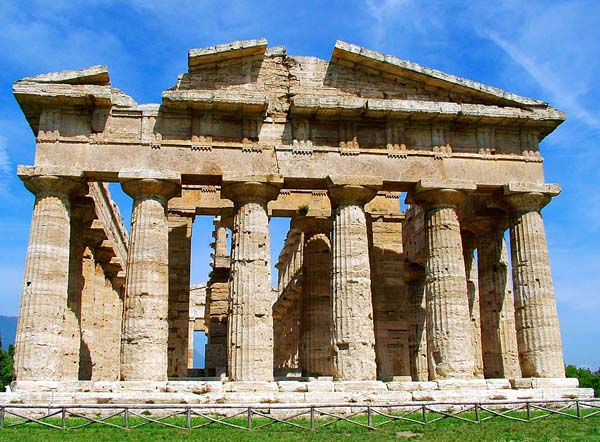
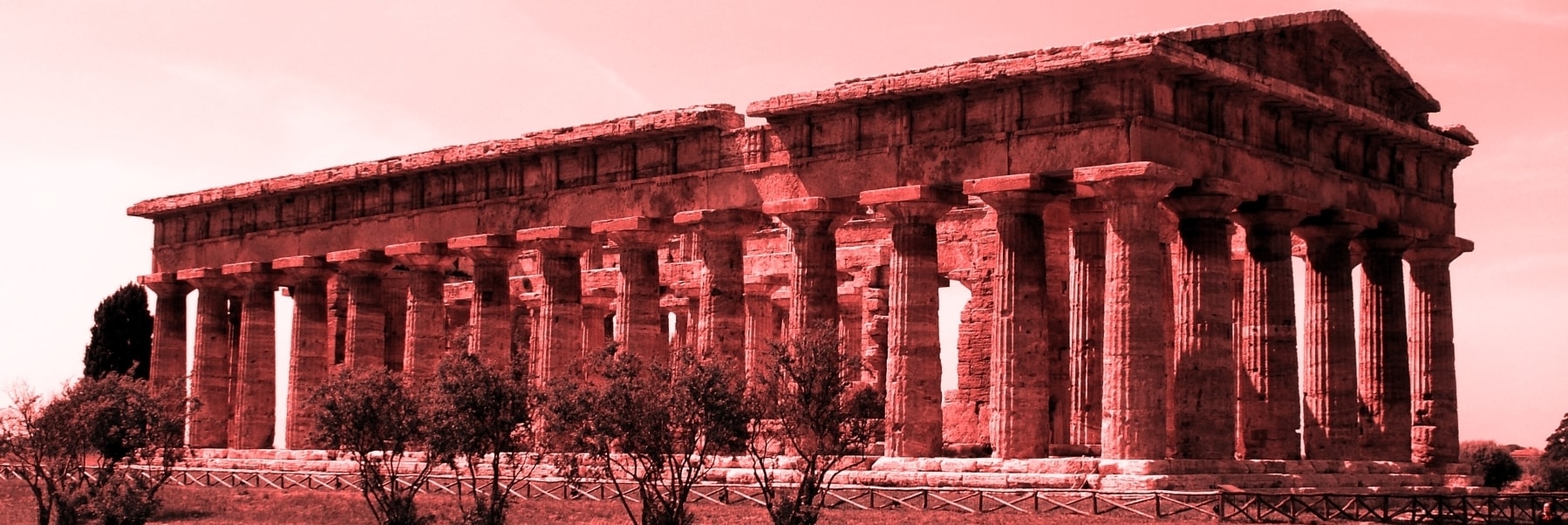
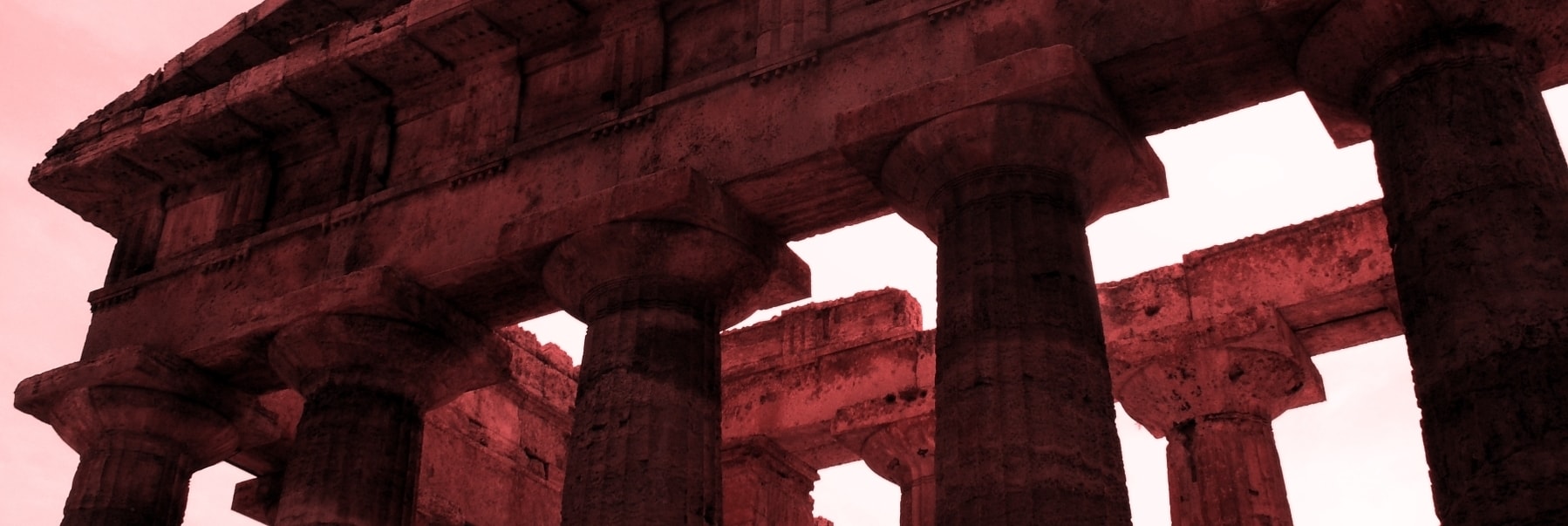
The Temple of Neptune is the largest and most imposing of the three great Greek temples at Paestum and one of the best-preserved Doric temples from the ancient Greek world.
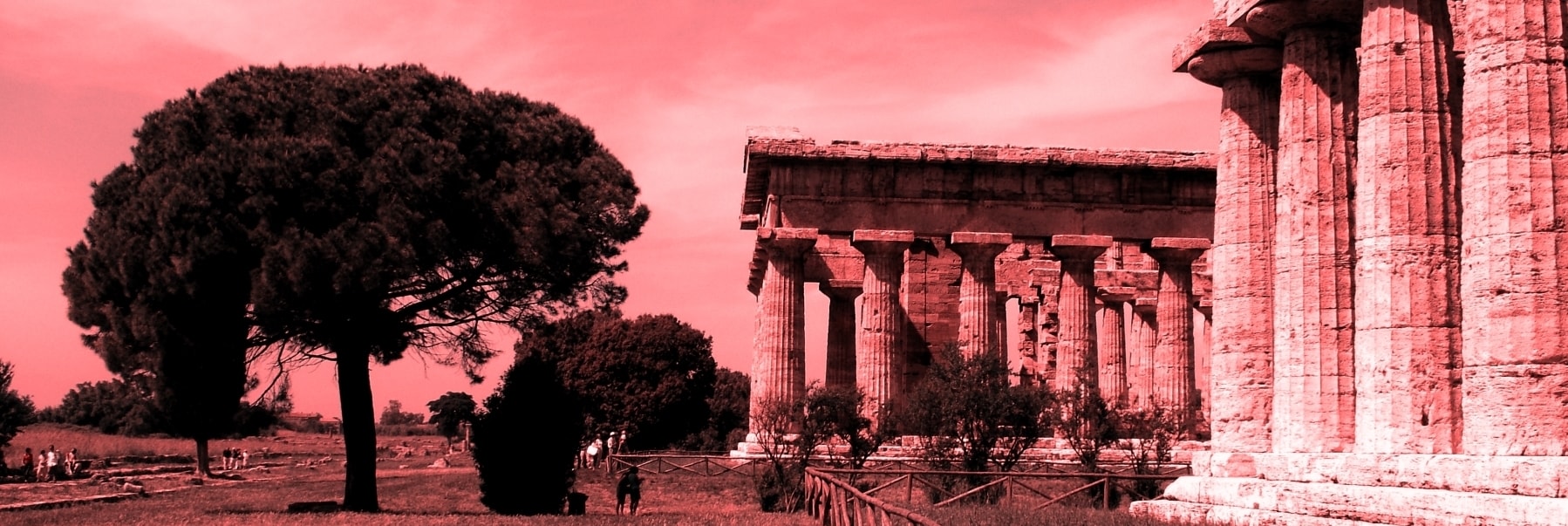
Built around the middle of the 5th century BC, during the Classical period, it stands in the southern sanctuary of ancient Poseidonia, immediately north of the older Temple of Hera, traditionally known as the Basilica.
Its exceptional state of preservation and monumental proportions make it one of the most recognisable symbols of Paestum.
Discover the Temple of Neptune, the great Doric masterpiece of Paestum
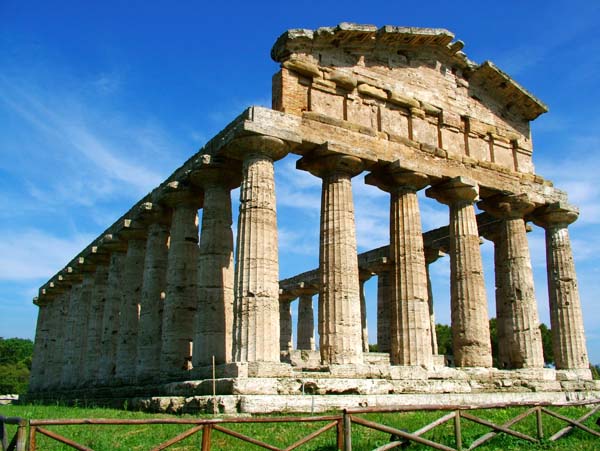
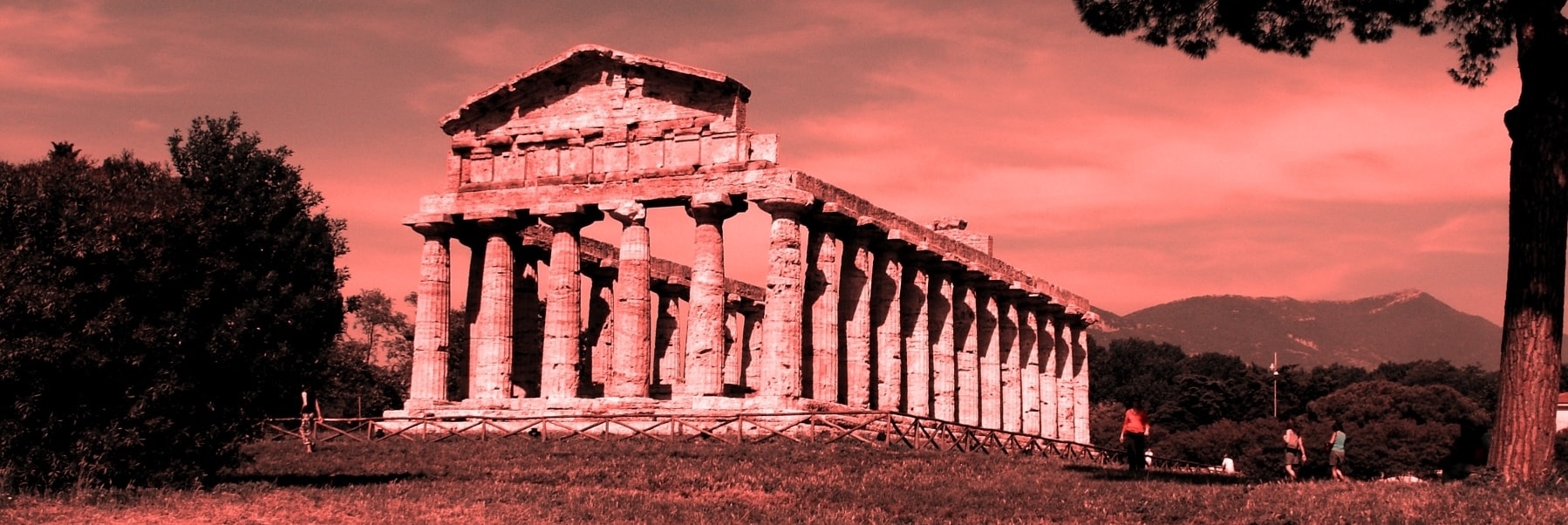
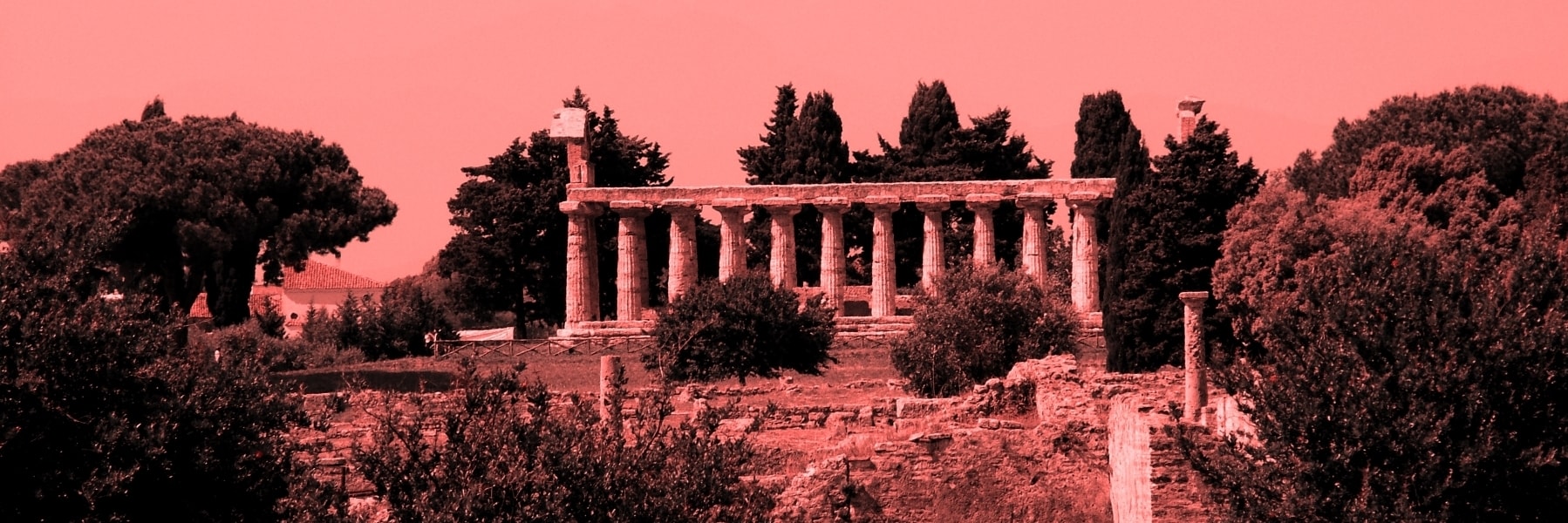
The Temple of Athena stands in the northern part of ancient Poseidonia, separate from the two great temples of the southern sanctuary.
Built around 500 BC, it is the second oldest of the three major Greek temples still standing at Paestum: later than the Temple of Hera, known as the Basilica, and earlier than the great temple traditionally called the Temple of Neptune.
Its architecture is particularly interesting because it combines elements of the Doric and Ionic orders, reflecting the transition from the Archaic period towards architectural forms that would become characteristic of Classical Greek architecture.
Discover the Temple of Athena and its unique Greek architecture
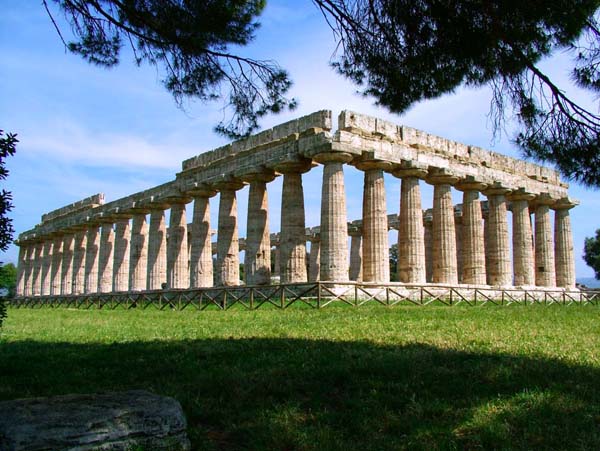
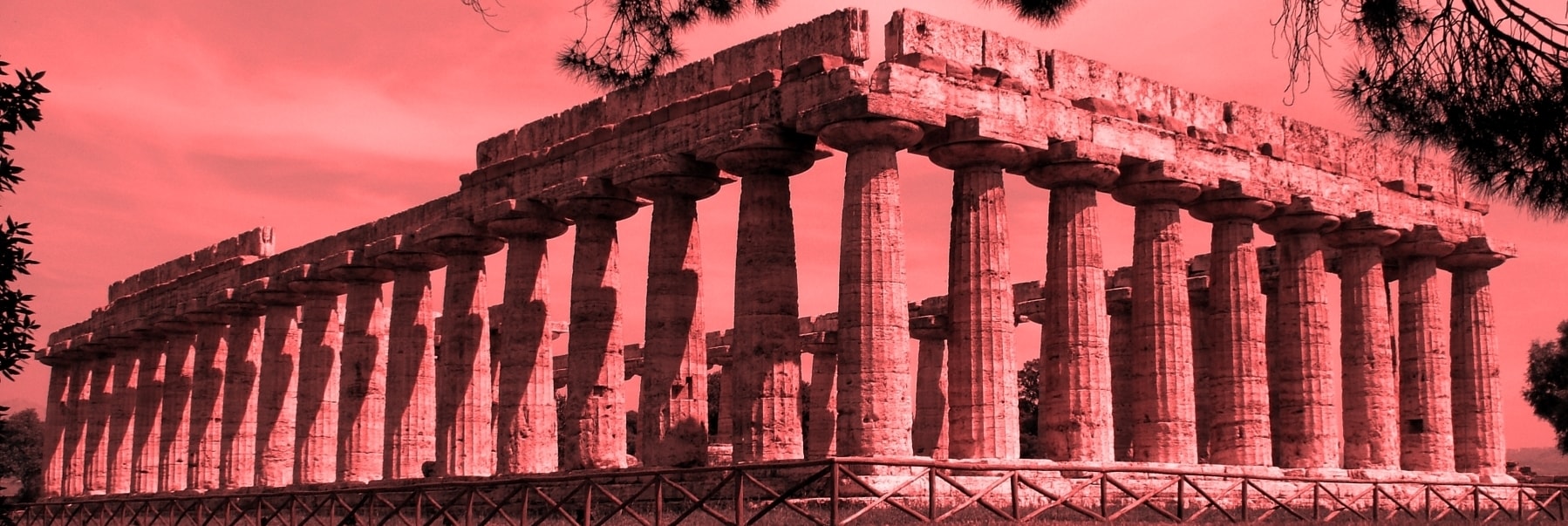
The Temple of Hera is the oldest of the three great Greek temples still standing at Paestum. It is located in the southern sanctuary of ancient Poseidonia, close to the monumental temple traditionally known as the Temple of Neptune.
Construction began around 560 BC and was completed around 520 BC, during a period of major development for the Greek city.
Discover the Temple of Hera, the oldest Greek temple at Paestum
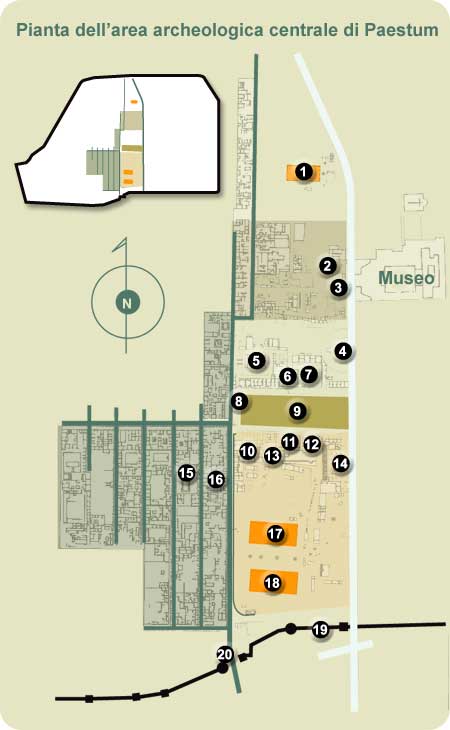
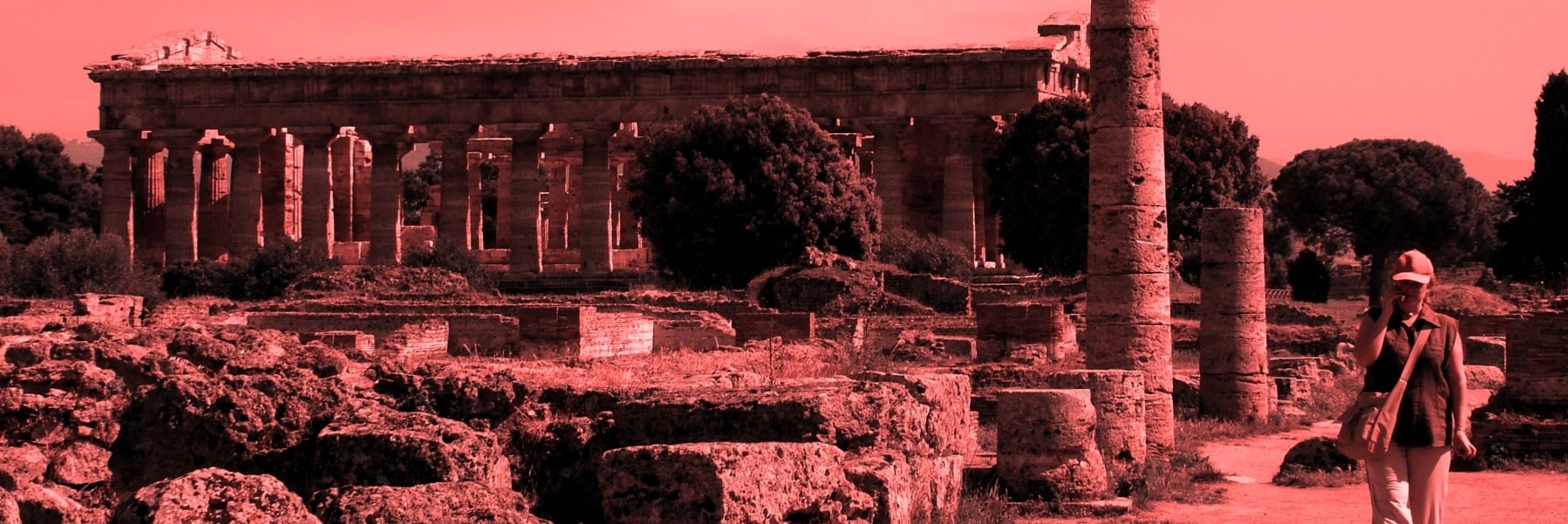
The archaeological area of Paestum preserves the remains of the ancient Greek city of Poseidonia and the later Roman city of Paestum.
Use the map to locate the three great Greek temples, the Roman Forum, the amphitheatre, the city walls and the other main monuments visible along the archaeological route.
Explore the archaeological map of Paestum and its main monuments