


 Paestum is one of the most important archaeological sites of Magna Graecia. Over more than a thousand years of history, the city changed population, culture and even its name: Poseidonia under the Greeks, Paistom during the Lucanian period and finally Paestum under Roman rule.
Its temples, city walls, forum, amphitheatre and the many artefacts preserved in the Archaeological Museum still reveal the different phases of its long history.
The origins and foundation of Poseidonia
The ancient city of Poseidonia was founded around 600 BC by Greek settlers from Sybaris, one of the most important Achaean cities of Magna Graecia.
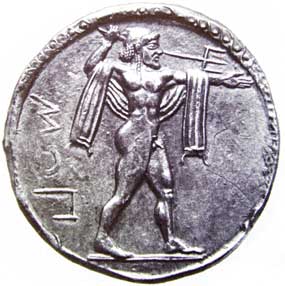
The name Poseidonia derived from Poseidon, the Greek god of the sea, to whom the city was closely connected.
The location offered excellent conditions for settlement: a fertile plain close to the sea, crossed by important communication routes and suitable for both agriculture and trade.
Poseidonia soon developed into a prosperous and well-organised Greek city.
The Greek city and its great temples
Between the 6th and 5th centuries BC, Poseidonia experienced one of the most prosperous periods in its history.
It was during these centuries that the monuments which have made Paestum famous throughout the world were built. In the southern sanctuary stands the great Temple of Hera, traditionally known as the “Basilica”, constructed around 560–520 BC.
In the northern part of the city the Temple of Athena was erected, while around 460 BC the imposing Doric temple traditionally known as the Temple of Neptune was completed.
The three temples therefore belong to different periods and provide an exceptional record of the development of Greek Doric architecture at Poseidonia.
The city also included an agora, sanctuaries, public buildings and residential districts arranged according to a carefully planned urban layout.
One of the most famous discoveries associated with ancient Paestum also dates from this period: the Tomb of the Diver, painted around 480–470 BC and now displayed in the Archaeological Museum of Paestum.
Paestum under the Lucanians
Towards the end of the 5th century BC, Poseidonia came under the control of the Lucanians, an Italic people established across much of southern Italy.
The change did not lead to the destruction of the city. During the 4th century BC, Paistom remained a flourishing centre with a growing population.
Greek and Lucanian traditions gradually interacted, as can be seen particularly in the numerous painted tombs and grave goods discovered in the surrounding necropolises.
For a short period, during the expedition of Alexander of Epirus in southern Italy, the city returned to Greek control, but the Lucanians regained it in 331–330 BC.
The Roman colony of Paestum
In 273 BC, Rome established a Latin colony at the site. From this period the name Paestum became firmly established.
Roman rule profoundly transformed the organisation and appearance of the city. The Greek agora gradually gave way to the Roman forum, around which new civic and religious buildings were constructed.
The Roman period also left the amphitheatre, houses, baths, shops and many other structures that can still be recognised throughout the archaeological area.
Paestum remained economically important for centuries, thanks in particular to the fertility of the surrounding plain. The city maintained close links with Rome and continued to function as an important agricultural centre during the Roman Imperial period.
The decline of the ancient city
The fall of the Western Roman Empire did not immediately bring an end to Paestum.
The city continued to be inhabited during Late Antiquity and became an episcopal seat by at least the 5th century AD.
Over the following centuries, however, its population gradually declined. Changing economic and environmental conditions, together with increasing insecurity in the region, contributed to the contraction of the settlement.
The population progressively moved towards safer areas further inland, and the ancient city was eventually largely abandoned.
The rediscovery of Paestum
For centuries, the great temples of Paestum stood surrounded by countryside and vegetation.
From the 18th century, Paestum began to attract increasing numbers of scholars, artists, architects and European travellers. It became one of the most fascinating destinations on the Grand Tour, the journey through Italy undertaken by European intellectuals and young aristocrats.
The Doric temples of Paestum had a profound influence on the study of Greek architecture and on the development of European Neoclassicism.
During the 20th century, archaeological excavations gradually brought large areas of the ancient city and its necropolises back to light, allowing researchers to reconstruct the history of Poseidonia-Paestum in ever greater detail.
Today, the archaeological area preserves an extraordinary record of the interaction between Greek, Lucanian and Roman cultures, making Paestum one of the most important places for understanding the history of Magna Graecia and ancient Italy.
Sources
Archaeological Parks of Paestum and Velia
UNESCO World Heritage Centre – Cilento and Vallo di Diano National Park with the Archaeological Sites of Paestum and Velia and the Certosa di Padula